Weekly Sermons & Videos
This Week
Last Week
November 1st Worship Service
All Saints Day
Today is All Saints Day. In 313 CE (4th century), Constantine enacted the Edict of Milan, recognizing Christianity as the religion of the empire. All Saints Day reaches back to the 4th century and was established to commemorate Christian martyrs. In the 9th century, the Catholic Church dedicated November 1st as the day when we remember and celebrate our Christian saints. Currently there are about 10,000 canonized saints. But to really understand All Saints Day, we need to look further back to the celebration of Samhain, an ancient Celtic holiday in Ireland, Scotland, Wales, and stretching into some areas of Northern Europe.
Samhain, established as a celebration between 800 and 600 BCE, is based on an annual environmental transition caused by the changing of the seasons. Celebrated on October 31 or November 1st, it marks the end of the summer/harvest season and the beginning of winter. When the Roman Empire conquered the Celts, they added their festival of Feralia, a commemoration of the dead and the traditions of the goddess Pomona, saint of fruit trees and orchards.
One of the aspects of Samhain was the thinning of the barrier between the realms of the living and the dead. Those who had passed were believed to return to their homes, and often meals and celebrations were prepared for them. The developing Christian Church, recognizing this as an established gathering of the people, added the Allhallowtide to the event. Allhallowtide is a three-day celebration starting with All Hallows Eve on October 31st (when the veil thins between the living and the deceased), with All Saints Day on November 1st and All Souls Day on November 2nd.
All Saints Day originally honored martyrs and canonized saints, but by the 8th century, it had evolved to commemorate all believers, both living and deceased. This shift allowed for a broader recognition of the faithful, not just those officially canonized by the Catholic Church.
And so all those who were believers in our salvation through the life, death, and resurrection of Jesus have moved to heaven, each becoming a saint through their own belief and diligence. From 1 Corinthians 1:2, "to them that are sanctified in Christ Jesus, called to be saints, with all that in every place call upon the name of Jesus Christ our Lord," King James Version. And all of us, following that path, will also be recognized as Saints, the children of God.
Join us for our All Saints Day Worship Service.
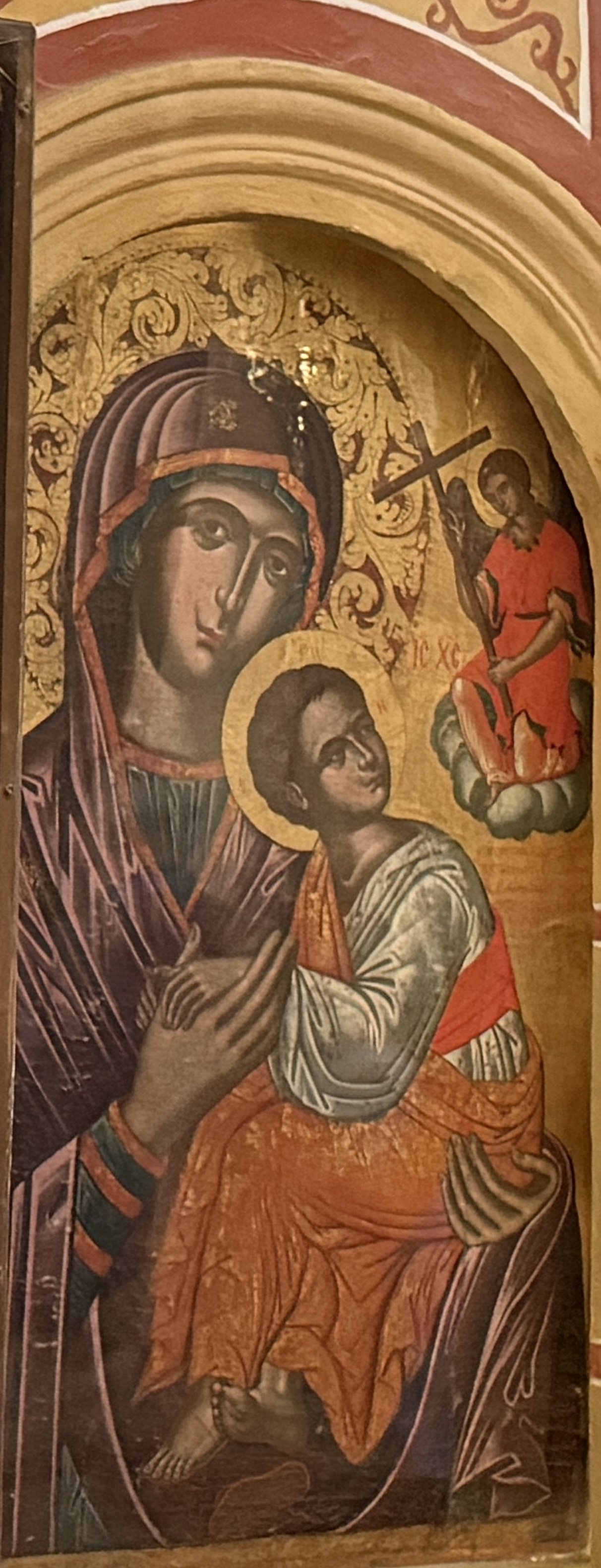
Photo: Virgin Mary and baby Jesus, Monastery Cathedral (church Hagios Demetrios) ruins, 13th century, Mystras, Greece
October 25th Worship Service
In Matthew 22:34-46 there a couple of things happening. Jesus is in his final days in Jerusalem. He is in the temple and is confronted by the Pharisees. They have asked Jesus what is the most important of God’s commandments. As scholars of the Old Testament they have a very clear understanding of the answer, and are hoping that Jesus has a contradictory answer that they might be able to use against him. Instead, Jesus’ answer is exactly what would be expected from someone who understands scripture. 22:37 He said to him, "You shall love the Lord your God with all your heart and with all your soul and with all your mind.” But Jesus goes continues the answer with, “22:38 This is the greatest and first commandment. 22:39 And a second is like it: 'You shall love your neighbor as yourself.”
And Jesus turns the situation with his own question, who do they think is the father of the Messiah? The Pharisees did believe in a coming Messiah, who would bring peace and justice to the world. He would be from the ancestry of David, but they did not necessarily believe he would be divine.
Their answer of course was David. But Jesus countered with 22:43 "How is it then that David by the Spirit calls him Lord, saying, (Psalm 110:1) 22:44 “The Lord said to my Lord, "Sit at my right hand, until I put your enemies under your feet?” 22:45 "If David thus calls him Lord, how can he be his son?" For this the Pharisees had no answer, and no one asked Jesus any more questions.
But because of the author of the Gospel of Matthew we have been given the answer. That the Messiah is of the heritage of David is documented in Matthew Chapter 1. That Jesus is Lord is found in several passages in the Gospel. In 7:22 Jesus says they will call him Lord. In 8:2 a man with leprosy calls Jesus Lord. Peter refers to Jesus as Lord during the transfiguration. The two blind men in 20:30-31 refer to Jesus as both the Son of David and Lord as they cry for his healing.
Since the events described in Matthew 22:34-46 we know what happened. We know of Jesus’ trial. His crucifixion. How the curtain in the temple hiding the Holy of Holy’s ripped open revealing God to the people, allowing every person a relationship with God. How Jesus was the sacrifice for the sins of all people. And the resurrection as Jesus overcame the power of death and in the process invited us to eternal life. Finally in the Great Commission how we were told as believers and followers of Jesus it is our job to spread the knowledge of God to all corners of the earth. And follow the Commandment of Love the Lord God with all our heart and soul and mind, and love our neighbor as ourselves.Mystras, Greece
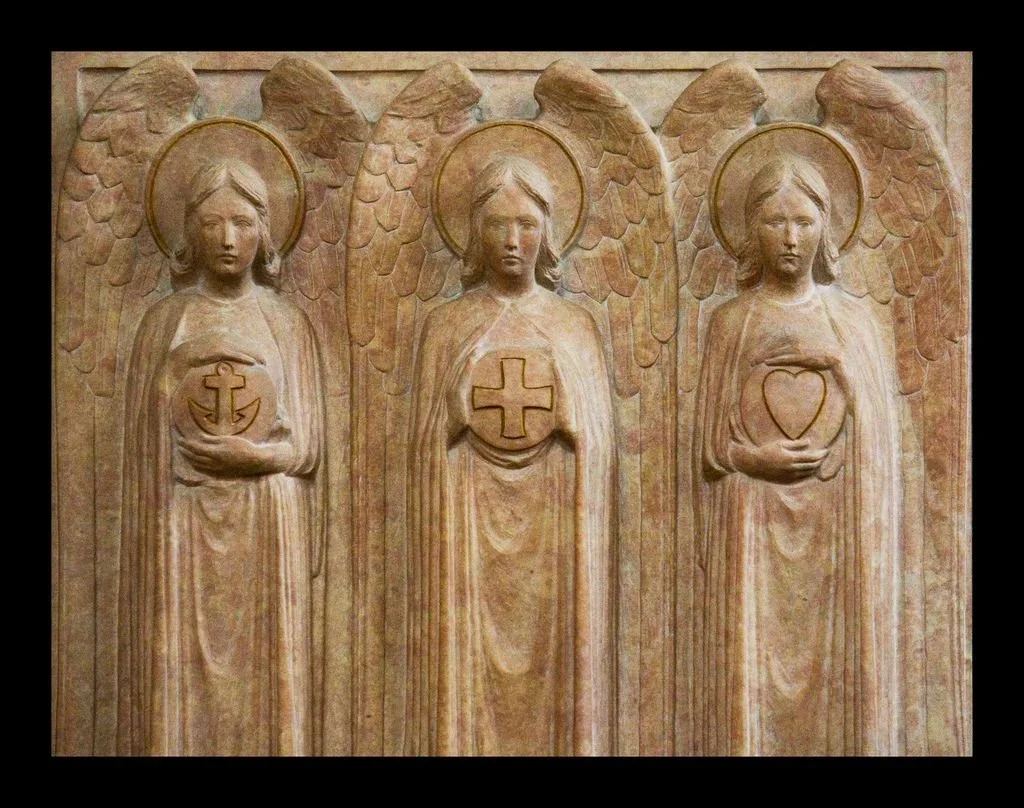
Photo: Sculpture: Faith, Hope and Charity, Sculptures, St Giles Cathedral, Edinburgh, Scotland, UK.